

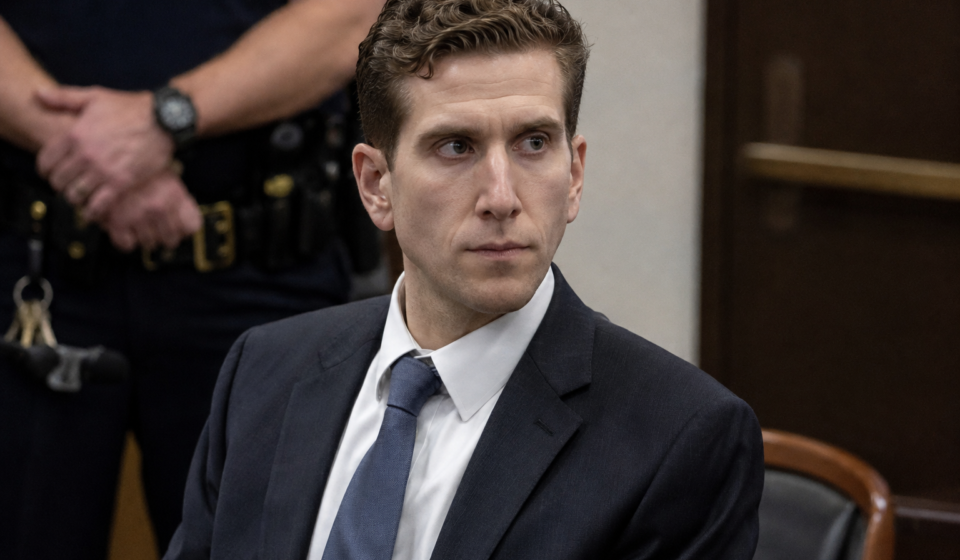
Why Did Bryan Kohberger Do It? What Is Known About the Motive

The question “why did Bryan Kohberger do it” has been asked by millions of people following one of the most widely discussed criminal cases in recent U.S. history. While the legal case has answered many questions about responsibility, the exact motive behind the killings remains uncertain. Public interest has been fueled by court proceedings, media coverage, and extensive online discussion, but separating confirmed facts from speculation is essential.
The most accurate answer is that no definitive motive has been publicly established. Investigators presented evidence that connected Bryan Kohberger to the crime, but a complete explanation for why the attack occurred has not been confirmed through official court findings. As a result, many theories continue to circulate, though they should not be treated as facts.
Understanding the Case
The case centers on the fatal stabbings of four University of Idaho students in Moscow, Idaho, in November 2022. The victims were:
- Kaylee Goncalves
- Madison Mogen
- Xana Kernodle
- Ethan Chapin
The investigation attracted worldwide attention because of the brutal nature of the crime, the lengthy search for a suspect, and the sophisticated forensic work that ultimately led investigators to Bryan Kohberger.
As the investigation unfolded, law enforcement relied on multiple forms of evidence, including DNA analysis, surveillance footage, cellphone records, and vehicle tracking. These pieces of evidence became central to the prosecution’s case.
Has the Motive Ever Been Officially Confirmed?
No. One of the most important points to understand is that the motive has never been fully explained in official court records.
Criminal cases do not always reveal why a person committed a crime. Courts are primarily concerned with determining whether the evidence proves guilt beyond a reasonable doubt. Although prosecutors may suggest possible motivations when relevant, they are not always required to establish a precise psychological reason.
For this reason, anyone searching for why did Bryan Kohberger do it should recognize that there is no universally accepted explanation supported by definitive evidence.
Why People Continue to Ask the Question
People naturally want to understand why shocking crimes happen. Knowing what occurred is only part of the story; many also want to know what could have motivated such violence.
Several factors contribute to ongoing public curiosity:
- The victims appeared to have no obvious connection to the suspect.
- The crime was highly unusual and received extensive media coverage.
- Many details remained sealed or undisclosed during legal proceedings.
- Online discussions often introduced theories that were never verified.
These factors created an environment where speculation spread rapidly across social media and internet forums.
Common Theories and Why They Remain Unproven
Because no official motive has been established, numerous theories have emerged. It is important to distinguish between speculation and verified information.
Targeted Attack Theory
Some observers suggested that one or more victims may have been specifically targeted.
This theory arose because investigators indicated that the attack may not have been random. However, public information has not conclusively identified why any individual would have been selected.
Obsession or Fixation
Another theory proposed that the suspect developed an unhealthy interest in one or more victims.
Although this possibility has been widely discussed online, publicly available evidence has not definitively established such a relationship or motive.
Interest in Criminology
Bryan Kohberger studied criminology, leading some people to speculate that his academic interests influenced the crime.
While this fact attracted attention, studying criminal justice or criminology does not imply criminal behavior. Millions of students pursue similar fields without engaging in violence. Therefore, educational background alone should never be viewed as an explanation.
Personal Psychological Factors
Many discussions focus on possible psychological issues.
Without verified medical records, expert testimony establishing a diagnosis, or official findings, assigning psychological motives would be speculative. Responsible reporting avoids drawing conclusions that are unsupported by evidence.
What Evidence Helped Solve the Case?
Rather than explaining motive, investigators concentrated on evidence linking the suspect to the crime.
Among the most significant categories of evidence discussed publicly were:
DNA Evidence
DNA analysis played a major role during the investigation. Modern forensic science allows investigators to compare biological evidence collected from crime scenes with known samples under strict legal procedures.
Surveillance Footage
Security cameras from homes and businesses helped investigators reconstruct vehicle movements before and after the crime.
These recordings became part of the timeline developed during the investigation.
Cellphone Data
Investigators analyzed cellphone records to establish movement patterns and location information.
Such evidence is commonly used alongside other investigative techniques rather than serving as proof on its own.
Vehicle Identification
Authorities focused on identifying a white Hyundai Elantra seen in the area around the time of the killings.
Vehicle analysis ultimately became another important piece of the overall investigation.
Why Motives Can Remain Unknown
Many people assume every criminal case ends with a complete explanation.
In reality, that is not always true.
A person responsible for a crime may never fully explain their actions. Even when statements are made, investigators may find them incomplete, inconsistent, or impossible to verify.
As a result, some cases conclude with strong evidence about who committed the crime while leaving questions about why it happened unanswered.
The Difference Between Evidence and Speculation
One reason the case generated so much confusion is that online discussions often mixed verified facts with personal opinions.
Reliable information generally comes from:
- Court documents
- Official law enforcement statements
- Judicial proceedings
- Confirmed forensic evidence
Speculation often comes from:
- Social media posts
- Anonymous online comments
- Unverified rumors
- Opinion-based videos
Learning to distinguish these sources helps readers understand high-profile criminal cases more accurately.
Lessons From the Investigation
Although the motive remains uncertain, the investigation demonstrated how modern law enforcement combines multiple investigative methods.
These included:
- DNA technology
- Digital forensic analysis
- Surveillance review
- Cellphone analysis
- Vehicle tracking
- Traditional detective work
No single piece of evidence solved the case independently. Instead, investigators built a comprehensive timeline using numerous sources.
Why Accurate Reporting Matters
Cases involving violent crime often generate enormous public interest. Unfortunately, they can also produce misinformation.
Responsible reporting requires acknowledging uncertainty when facts have not been established. Saying “we do not know” is often more accurate than presenting an unsupported theory as fact.
This approach protects both the integrity of the justice system and the public’s understanding of the case.
How Media Coverage Shaped Public Interest
The Bryan Kohberger case became one of the most closely followed criminal investigations in recent years. Continuous news coverage, documentaries, podcasts, and online discussions ensured that millions of people remained engaged with every development.
While this attention helped explain investigative procedures to the public, it also encouraged speculation whenever official information was limited. As a result, many rumors spread faster than verified facts.
For readers researching the case today, it is helpful to prioritize information that comes from official legal proceedings rather than viral online claims.
What We Can Say With Confidence
Several points are supported by the public record:
- Four University of Idaho students were killed in November 2022.
- Investigators conducted an extensive forensic investigation.
- Multiple forms of evidence were used during the case.
- The legal process addressed criminal responsibility.
- No definitive public explanation has established exactly why the crime was committed.
These conclusions reflect the distinction between what has been demonstrated through evidence and what remains unknown.
Conclusion
When people search “why did Bryan Kohberger do it,” they are looking for an explanation behind a tragic and deeply disturbing crime. The most accurate answer is also the simplest: the exact motive has not been conclusively established in the public record. Although numerous theories continue to circulate, none should be treated as proven unless supported by verified evidence from official legal proceedings.
Understanding the difference between confirmed facts and speculation is essential in any high-profile criminal case. By relying on court records, law enforcement findings, and credible reporting rather than rumors, readers can develop a clearer and more accurate understanding of what is known—and what remains unanswered.